
Multi-chain Assets
Understand where assets live by network and distinguish parameters, addresses, and confirmation state instead of treating separate chains as one shared ledger.
Understand multi-chain networks →imtoken multi-chain wallet
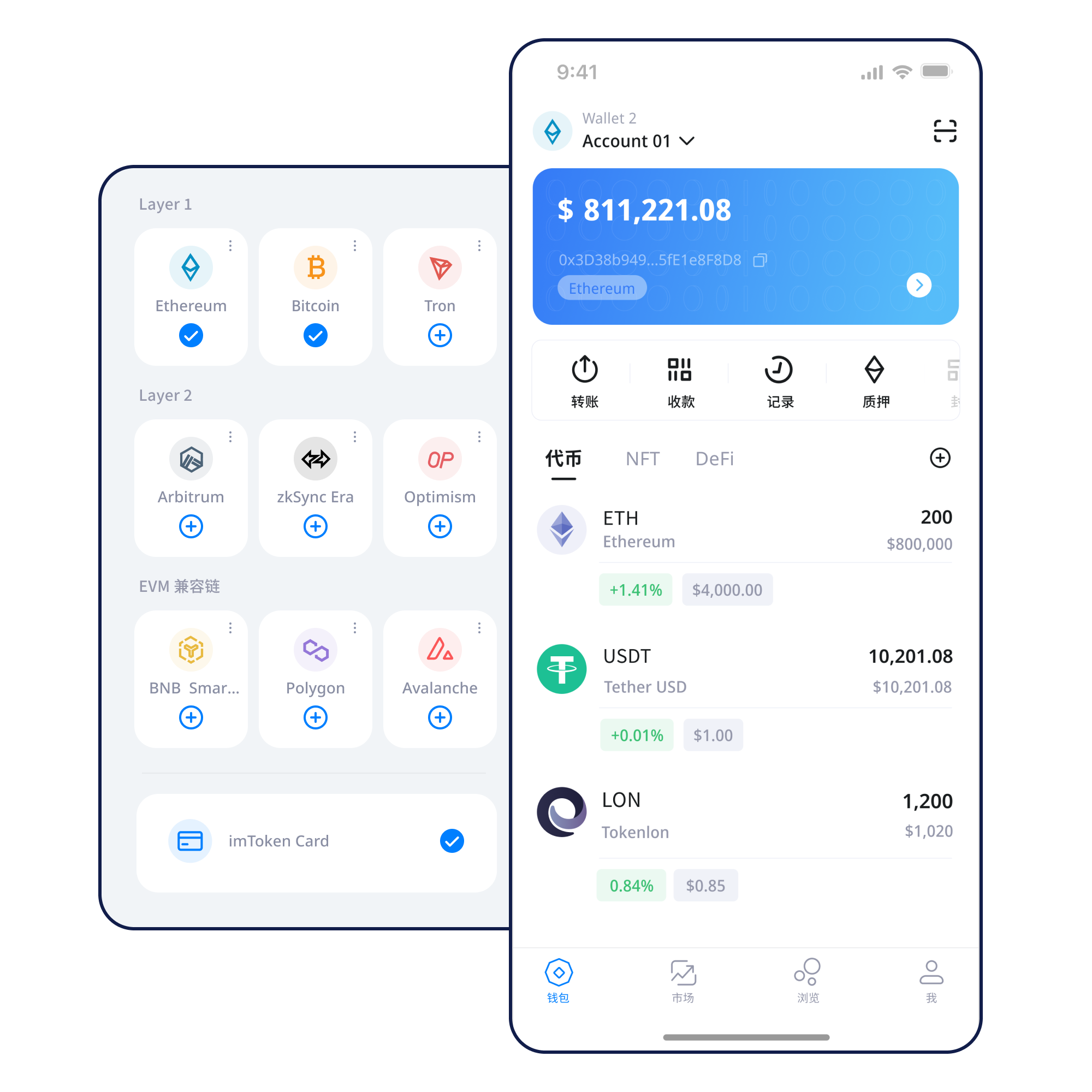
Use one clear framework to understand multi-chain assets, network selection, sending and receiving, DApp connections, token approvals, and wallet security. imtoken also explains public chains, EVM networks, Layer 2 systems, gas, confirmations, and on-chain records so each action can be understood before it is approved and verified afterward.
Start with a task
Wallet capabilities
Understand where assets live by network and distinguish parameters, addresses, and confirmation state instead of treating separate chains as one shared ledger.
Understand multi-chain networks →Verify the receiving network and address, then review amount, gas, transaction hash, and confirmation state when sending.
Read the transfer guide →Manage networks, review assets and history, and keep DApp requests within clear boundaries on a mobile device.
Explore the app →Browser sessions should be reviewed for site origin, account requests, network changes, signatures, approvals, and disconnection.
Learn about web connections →
Your seed phrase and private keys remain under your control. imtoken staff will never ask for them or for your verification code.
Open the security center →A multi-chain wallet can organize activity across chains, but assets, gas, transactions, and contracts remain network-specific. Identify the network before reviewing the address and target.
Continue reading
Nodes maintain a shared ledger, transactions enter blocks, and later blocks can increase confirmation depth. Block explorers help verify state and fees.
Continue reading
EVM networks share many account and smart-contract concepts, but chain IDs, gas assets, balances, and deployments remain independent.
Continue reading
Layer 2 systems often depend on a base layer for settlement or security. Cross-layer actions may involve bridges, waiting periods, and separate confirmation stages.
Continue readingGas reflects computation and block-space cost. Network conditions can affect fees and waiting time, while a transaction hash is a key reference for confirmation progress.
Continue readingWallet journey
Use the site’s single download entry point rather than unverified installation files.
Know the difference and never hand recovery material to a third party.
Store the seed phrase offline. Avoid screenshots, shared cloud storage, or chat messages.
Check the network name, gas asset, and destination before acting.
Review address, network, and amount; consider a small test transfer for important sends.
Keep the transaction hash, verify on-chain state, and review permissions you no longer need.
Web3 & DApps
Connecting a wallet does not mean every later signature or approval should be accepted. Treat each request as a new decision.
Open the Web3 guide →Security
Your seed phrase and private keys remain under your control, and legitimate imtoken staff will never request them. Review the address, network, and amount before sending. When using a third-party DApp, verify the domain, request details, and approval scope. On-chain transactions generally cannot be reversed by a wallet alone, and smart contracts can introduce technical risks, so the strongest habit is to review before confirming rather than rely on recovery afterward.
Open the security center →Academy · Featured introduction
Start with addresses, seed phrases, private keys, networks, and gas. Then learn transaction hashes, DApps, and token approvals. Once those concepts are clear, you can evaluate on-chain actions consistently even when the interface changes.
Start learning →Ethereum & PoS
Understand Ethereum proof of stake, validator duties, reward sources, network state, withdrawal, and exit mechanics. Staking does not guarantee returns, and rewards and waiting periods can change.
Learn Ethereum staking →Product & security updates
FAQ
A wallet manages keys and account views; the asset records live on their respective blockchain networks.
A connection usually establishes a session, while later signatures, approvals, and transactions need separate review.
It is a key reference for locating and verifying a transaction on the corresponding block explorer.
Gas depends on network rules, computation, and demand for block space, so fees can move with network conditions.
No. imtoken staff will never request your seed phrase, private key, or verification code.
No. Rewards, waiting periods, protocol penalties, technical risk, and market conditions can all change.
imtoken
All download buttons use the same on-site download page. Your seed phrase, private keys, and verification codes remain under your control.